
<-
Back to
News
A new certificate programme, «Total Defence: Leading Resilient Ukraine», has been launched in Ukraine. The programme explores total defence as a governance approach in the context of protracted war and sustained systemic pressure.
The programme is implemented by the NGO Join Ukraine in cooperation with the Ukrainian Catholic University, in partnership with Swedish institutions — the FBA) and the Swedish Psychological Defence Agency.
The programme focuses on decision-making in environments where threats simultaneously affect public governance, the economy, the information space and social cohesion — and where actions taken by one sector inevitably generate consequences for others. For this reason, intersectoral coordination of decisions is a core principle of the programme.
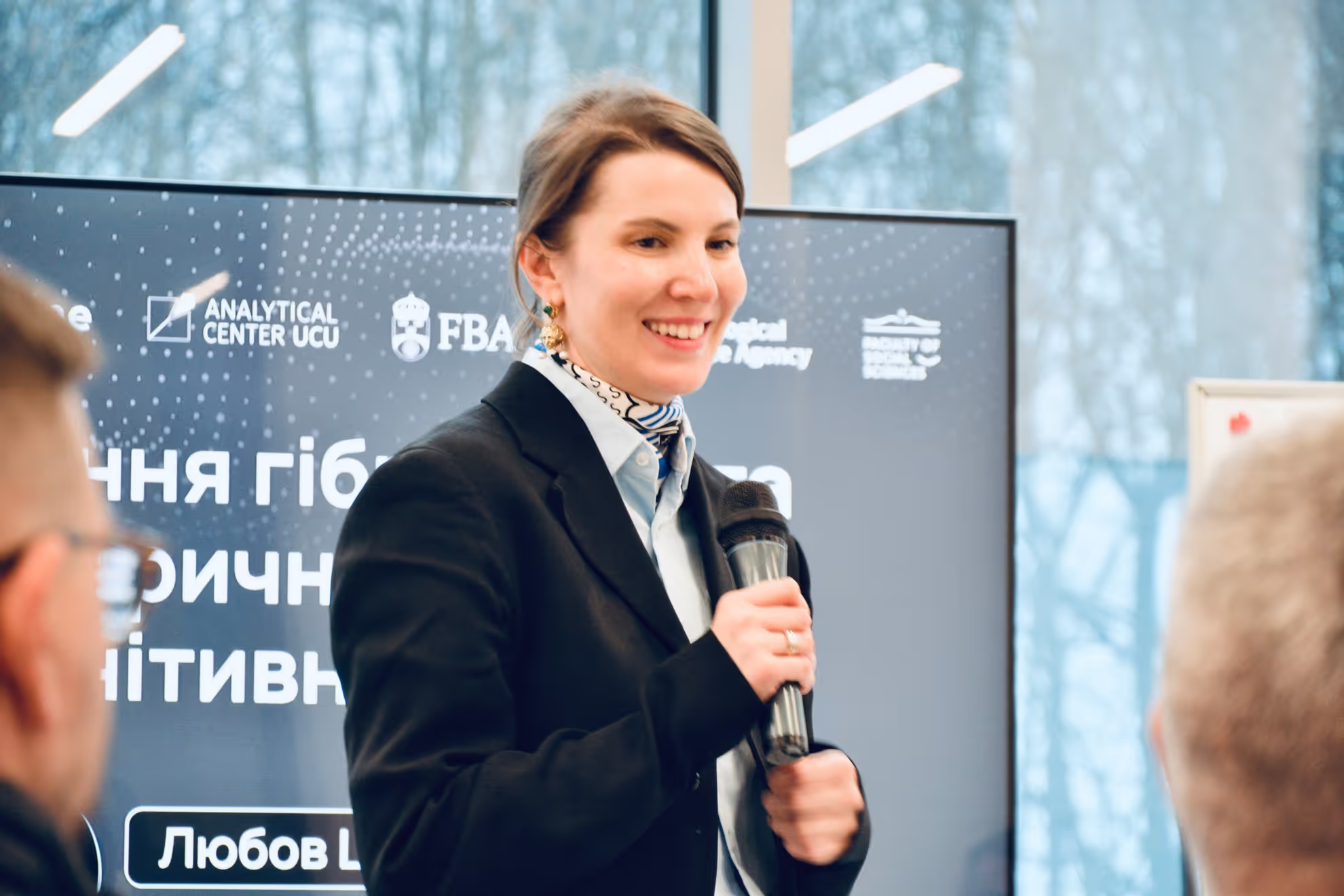
The Director of «Join Ukraine», Liubov Tsybulska, emphasises:
«This programme is about a modern understanding of security as a shared, intersectoral responsibility. It is about building a common governance framework for the state, business, civil society, media and the security sector. Total war requires total defence. Because in modern wars, it is not armies that win — it is societies»
An essential component of the programme is the integration of the Swedish total defence experience, which conceptualises defence not only as military capability, but as the readiness of all systems to act coherently before a crisis occurs — through clearly defined roles, trust, and continuity of governance.
Nemo Stjernström, Head of Strategic Communications at the Swedish Psychological Defence Agency, notes:
«Total defence is not only about military capabilities. It is about governance that can function under pressure; about economic continuity; about a reliable and trustworthy information environment. But above all, it is about trust — between citizens, between society and the state, and within systems themselves.»
Programme structure and participants
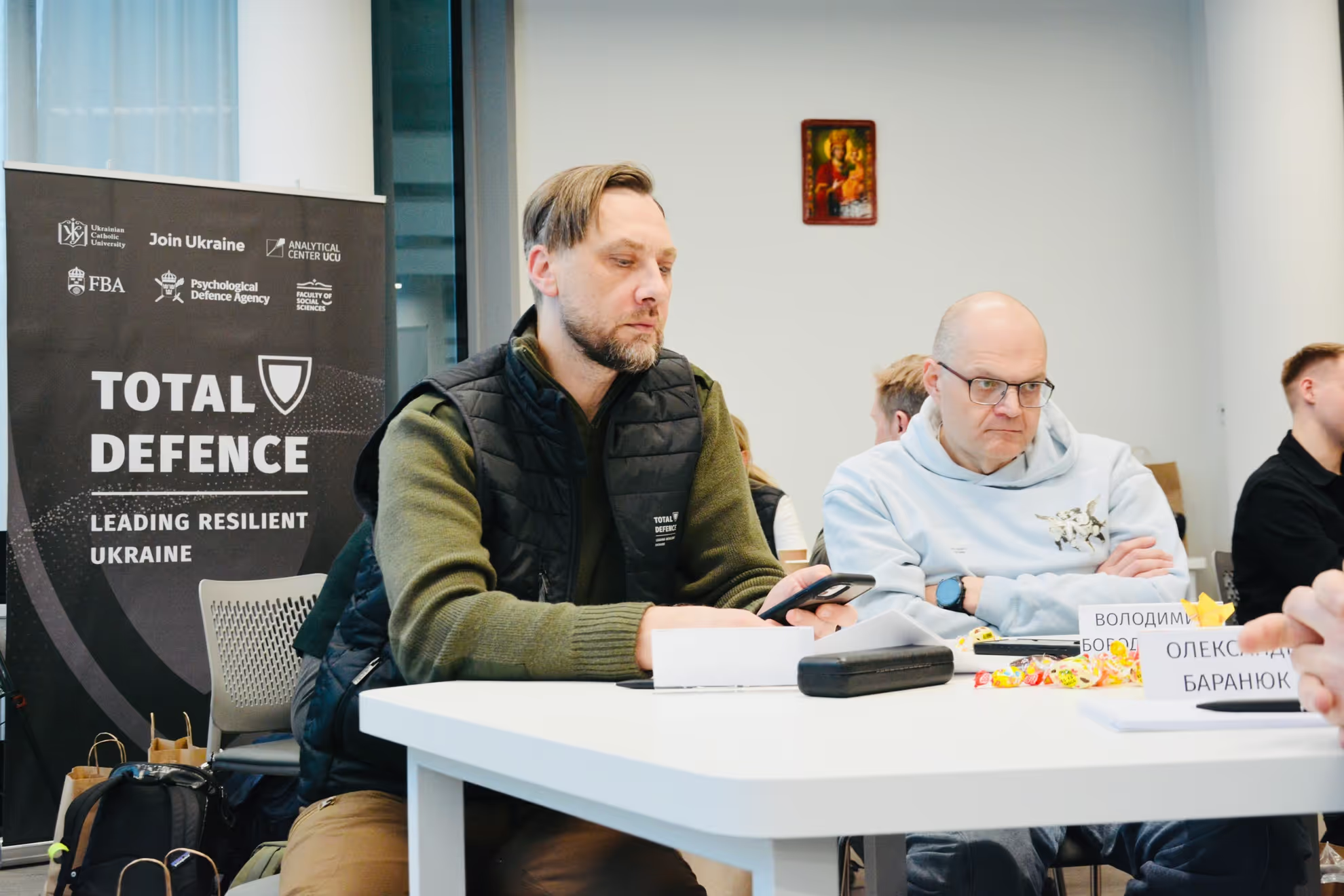
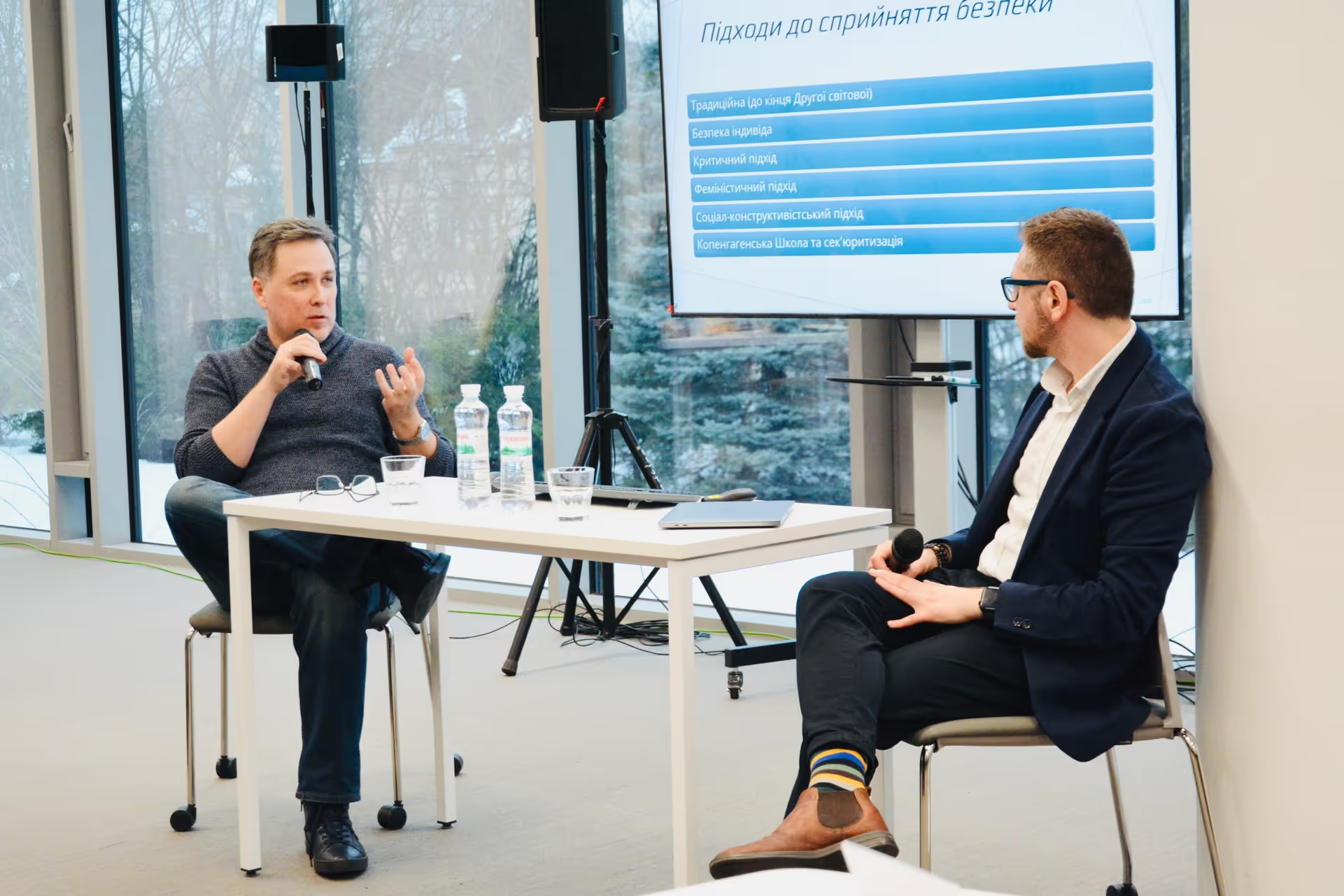
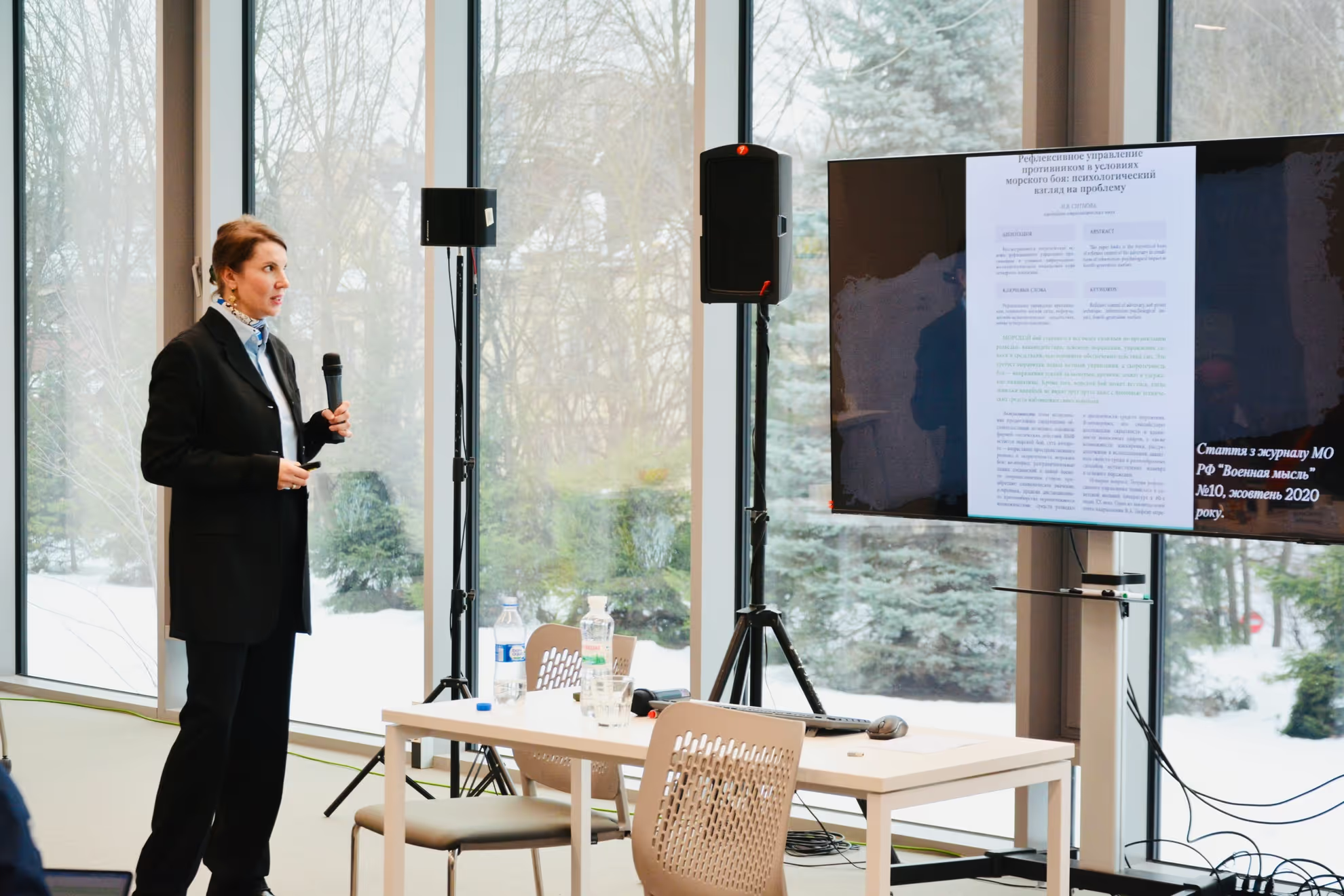
The educational programme consists of seven three-day modules and will run until June. The first module focused on the changing nature of contemporary security threats and their impact on governance and decision-making.
Participants worked with topics including global shifts in the balance of power, expansionist doctrines, hybrid and cognitive influence operations, as well as issues of trust, institutional resilience and intersectoral interaction.
The programme brings together decision-makers and leaders from five sectors — public administration, business, civil society, media and the security sector — whose decisions have long-term implications for national resilience. The first cohort was formed by invitation of the organisers. In the future, participation will be open through an application process.
Volodymyr Turchynovskyi, Dean of the Faculty of Social Sciences at the Ukrainian Catholic University, highlights:
«Total defence is a mindset — a way of thinking, of commitment and of interaction among citizens that engages the whole of society.»
What’s next
The upcoming modules will focus on in-depth analysis of security challenges, governance models under crisis conditions, and practical instruments for intersectoral cooperation.
Upon completion of the programme, participants will receive certificates and a shared governance framework for understanding total defence — as a foundation for the resilience of both the state and society.

<-
Back