
<-
Back to
News
The second module of the Total Defence: Leading Resilient Ukraine certificate programme focused on cross-sector coordination as one of the key pillars of national resilience. Participants explored how coordination between government institutions, businesses, and civil society can become an effective mechanism for responding to today's security challenges.

During the module, Swedish partners presented practical approaches to implementing the Total Defence concept, with a particular focus on institutional coordination, psychological defence, and cooperation across sectors. Special attention was given to coordination gaps and misaligned incentives, which can significantly undermine decision-making during crises.
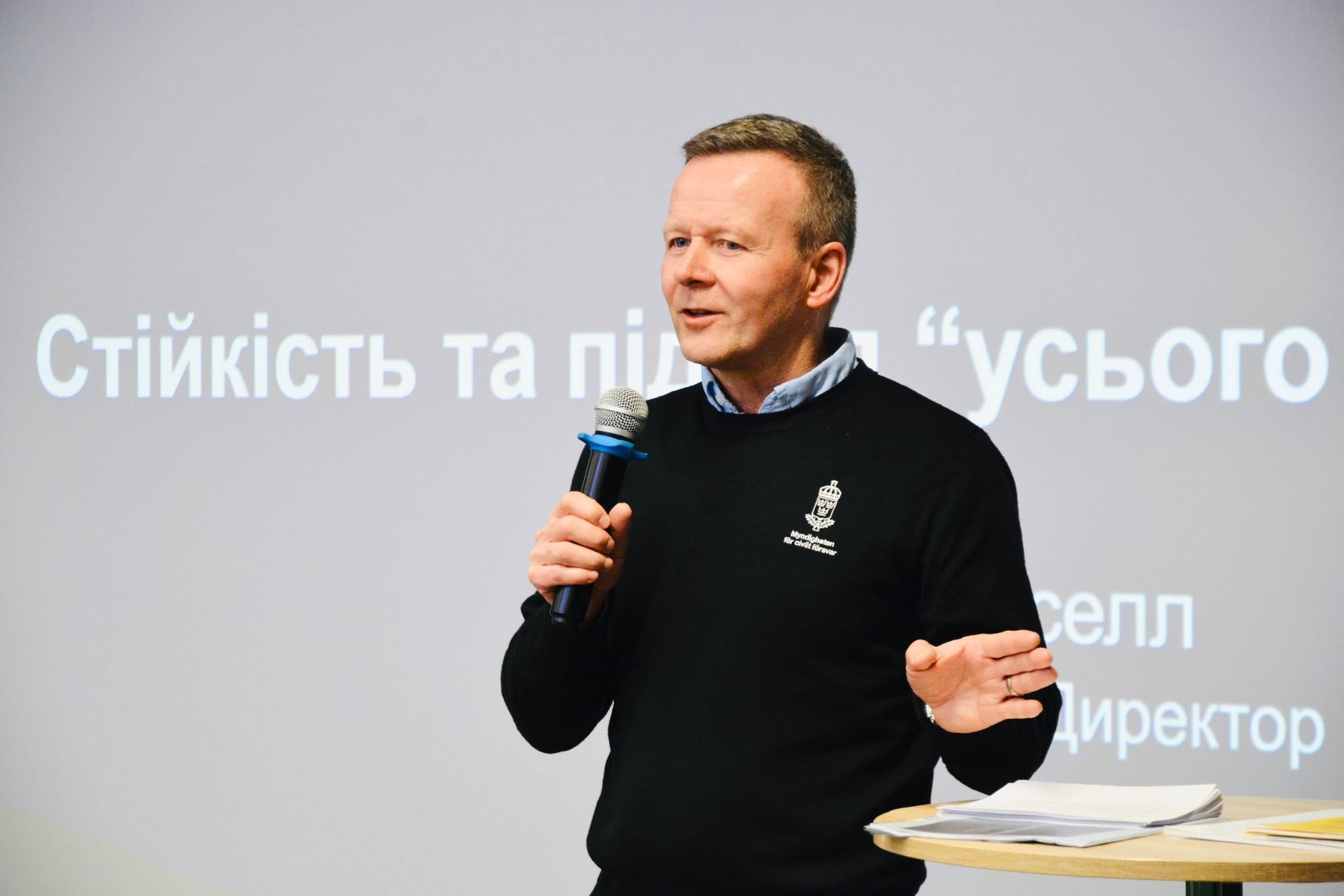
The practical component included an interactive hybrid-threat simulation, where participants worked through scenarios involving asymmetric challenges, cross-sector coordination, and crisis management.
In the Ukrainian context, participants discussed:
The module concluded with an interdisciplinary simulation exercise in which teams made decisions in real time, assessed the consequences of their actions, and adapted their responses as the scenario evolved.
Overall, the second module was designed to strengthen participants' ability to identify and address coordination gaps before they escalate into strategic vulnerabilities, helping institutions respond proactively rather than reactively to crises.
<-
Back