
<-
Back to
News
The first module of Total Defence: Leading Resilient Ukraine took place in Lviv on 15-17 October, marking the start of the programme's second cohort. More than 30 leaders from a range of fields took part. Over three days, they discussed Russian hybrid operations, shifts in global politics, and ways to identify threats early and prepare for crises.
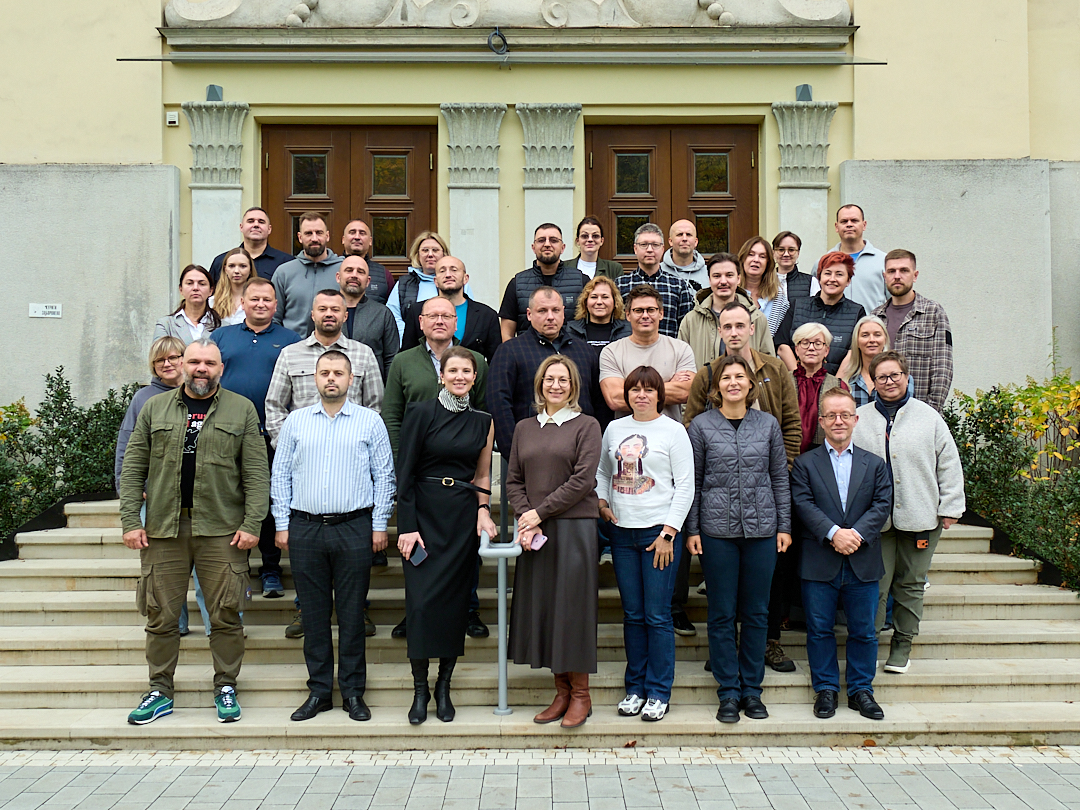
The first day focused on contemporary threats and Ukraine's role in the world. Mykhailo Fedorov, Ukraine's Minister of Defence in 2026, spoke about Ukraine's place in the global security landscape. Participants also discussed with Dmytro Sherenhovskyi, Vice-Rector of the Ukrainian Catholic University (UCU), why defending the country requires a joint effort from the state, the military, business and society.
The second day focused on hybrid threats and Russian influence operations. Liubov Tsybulska, Director of the Join Ukraine NGO, spoke about cognitive warfare, while Jon Kyst of the EU Advisory Mission in Ukraine presented a European perspective on Russian hybrid operations. Participants also explored how Russia's intelligence services operate, how law can be used as a tool of confrontation, and how the global balance of power is shifting.
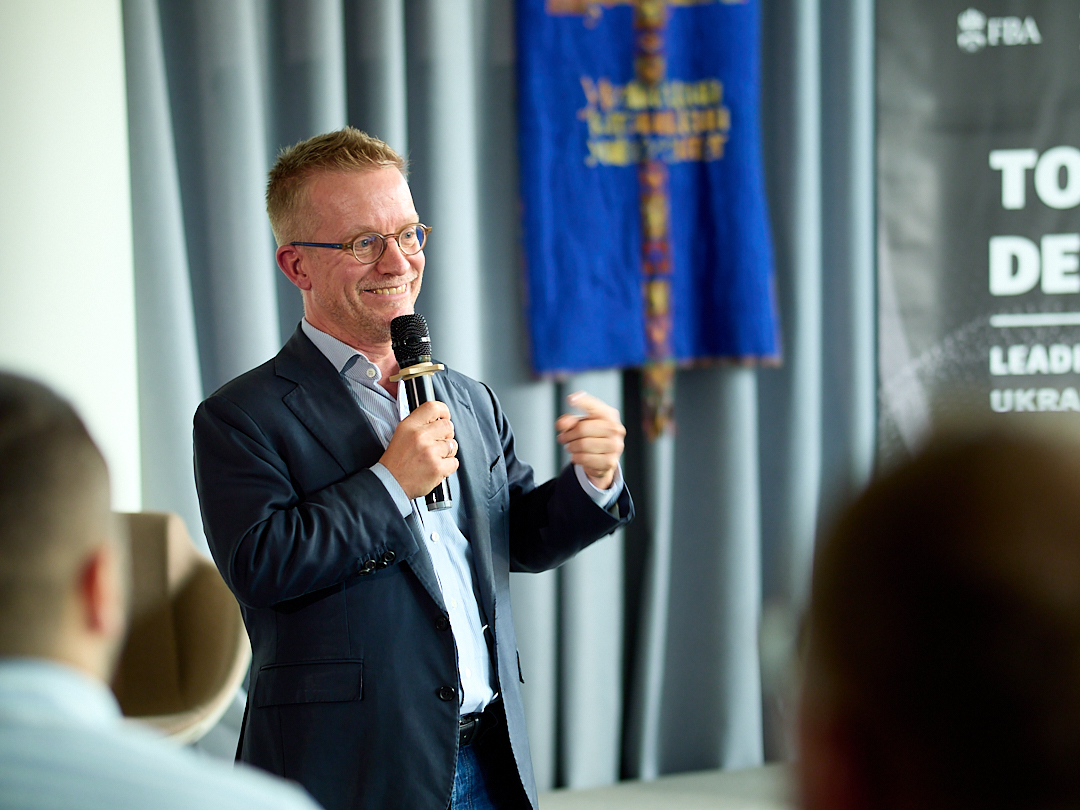
The third day focused on identifying threats early and planning responses in conditions of uncertainty. Participants discussed early warning systems and ways to plan for different future scenarios. Valentyn Petrov, Head of the Department of Military Security, Mobilisation and Territorial Security at the National Security and Defence Council of Ukraine, explained how data, forecasting and coordination between institutions help prepare for crises.
At the end of the module, participants formed teams, chose project topics and planned their next steps.

The programme brought together representatives of government institutions, the security and defence sector, local authorities, business, civil society organisations and the media. The training will help them better understand each other's work and find common solutions. After all, a country's defence depends not only on individual institutions doing their jobs, but also on how effectively they work together.
<-
Back