
<-
Back to
News
Andrii Sukharyna, Join Ukraine, March 2026
Join Ukraine systematically researches discussions in Russian regional communities on VKontakte and Telegram. The goal is to track public sentiment, reactions to government actions, and the impact of the war on everyday life in different regions of the Russian Federation. But this note is based exclusively on data from Telegram communities — for an obvious reason: one of the key research topics is precisely the blocking of Telegram as a messenger.
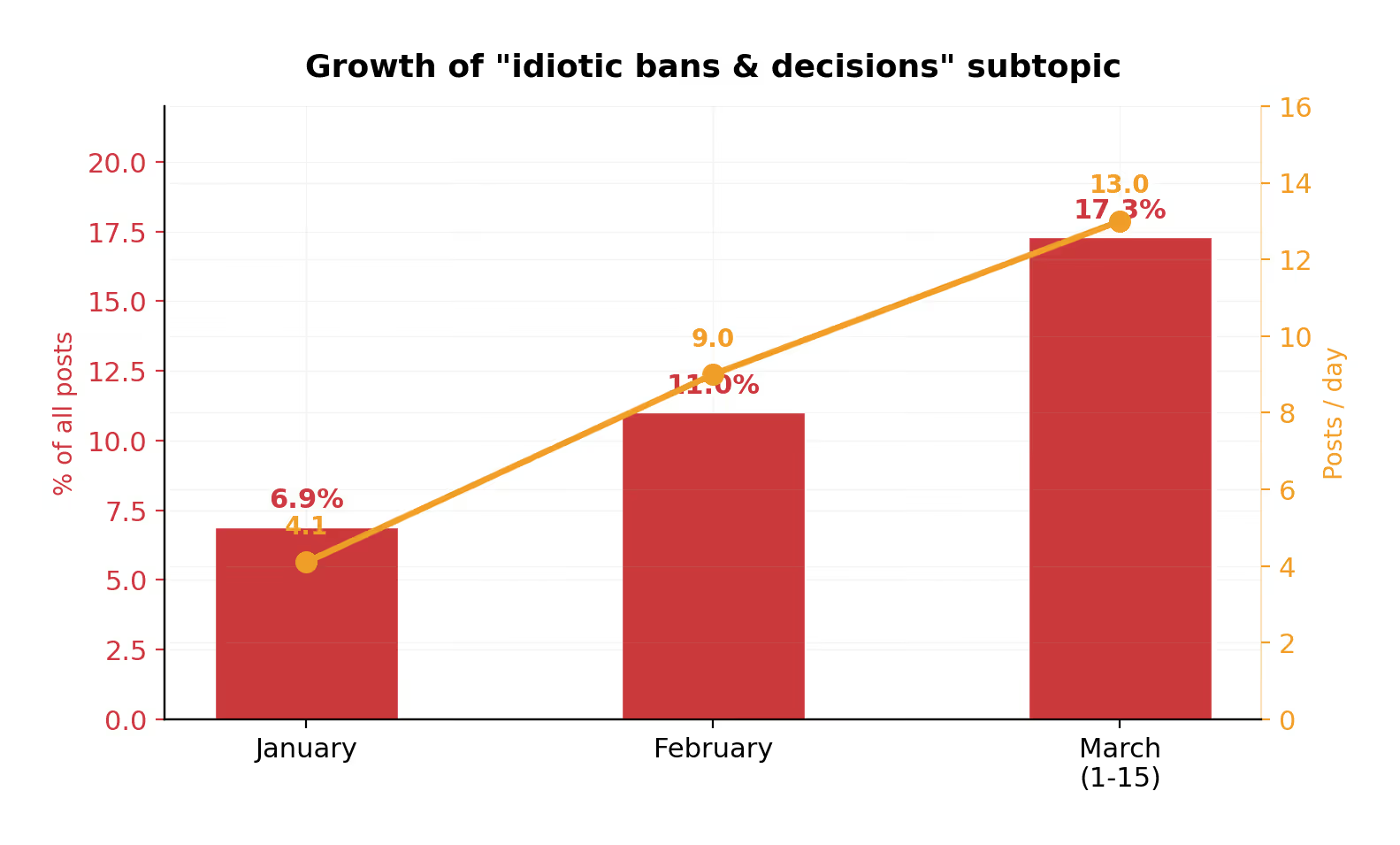
Over 11 weeks of monitoring, 12 large Moscow and Moscow Oblast Telegram channels recorded a systemic shift in the agenda: from utility complaints to political discontent. The topic of ‘idiotic bans’ — blocking Telegram, VPN restrictions, mobile internet shutdowns — grew from 6.9% of all publications in January to 17.3% in March, surpassing all other topics in reach, including roads and transport.
Telegram blocking went through five waves over three months. The peak came on February 10, when it was confirmed that the blocking had begun. The authorities displayed a chaotic communication pattern: Roskomnadzor twice denied restrictions on the very days they were in effect. The audience noticed this and documented that ‘propaganda lies’.
Mobile internet shutdowns represented a qualitatively new level of restrictions. From March 5 to 15, 30% of Moscow’s districts (40 out of 132) were left without mobile connectivity. Losses over the first five days amounted to 3–5 billion rubles. Only four state-controlled services remained accessible: VKontakte, Yandex, Gosuslugi and MAX.
The audience does not believe in a single explanation for the restrictions. The theories — censorship, lobbying in favor of state platforms, counter-drone measures, concealing the consequences of strikes, and a rehearsal for the ‘sovereign internet’ — do not compete with one another but combine into a single picture in which security logic serves as a convenient cover for the authorities for digital isolation, though the public does not particularly trust it.
The source base comprises 12 major Telegram channels from Moscow and Moscow Oblast. These include large urban aggregators (Novosti Moskvy, Moskvach, Moskva Segodnya, Moskva 24/7, Pervyi Moskovskiy) as well as local channels from the Moscow Oblast suburbs (Khimki, Mytishchi, Lyubertsy, Ramenskoye, Sergiyev Posad, and others).
In total, from the beginning of the year to March 15, 2026, over 10,000 posts were collected together with comments. Those containing negative content — criticism of authorities, complaints, anxiety, outrage — were selected. These amounted to approximately half (~5,200 posts). This dataset formed the basis for the analysis.
For each post, the following data were recorded: date, channel, number of views, reposts, replies, reactions (emoji), and thematic classification using an LLM model (big topic and subtopic). Audience reactions (emoji under posts) were analyzed separately — they are not available in all channels, as some large aggregators disable this feature.
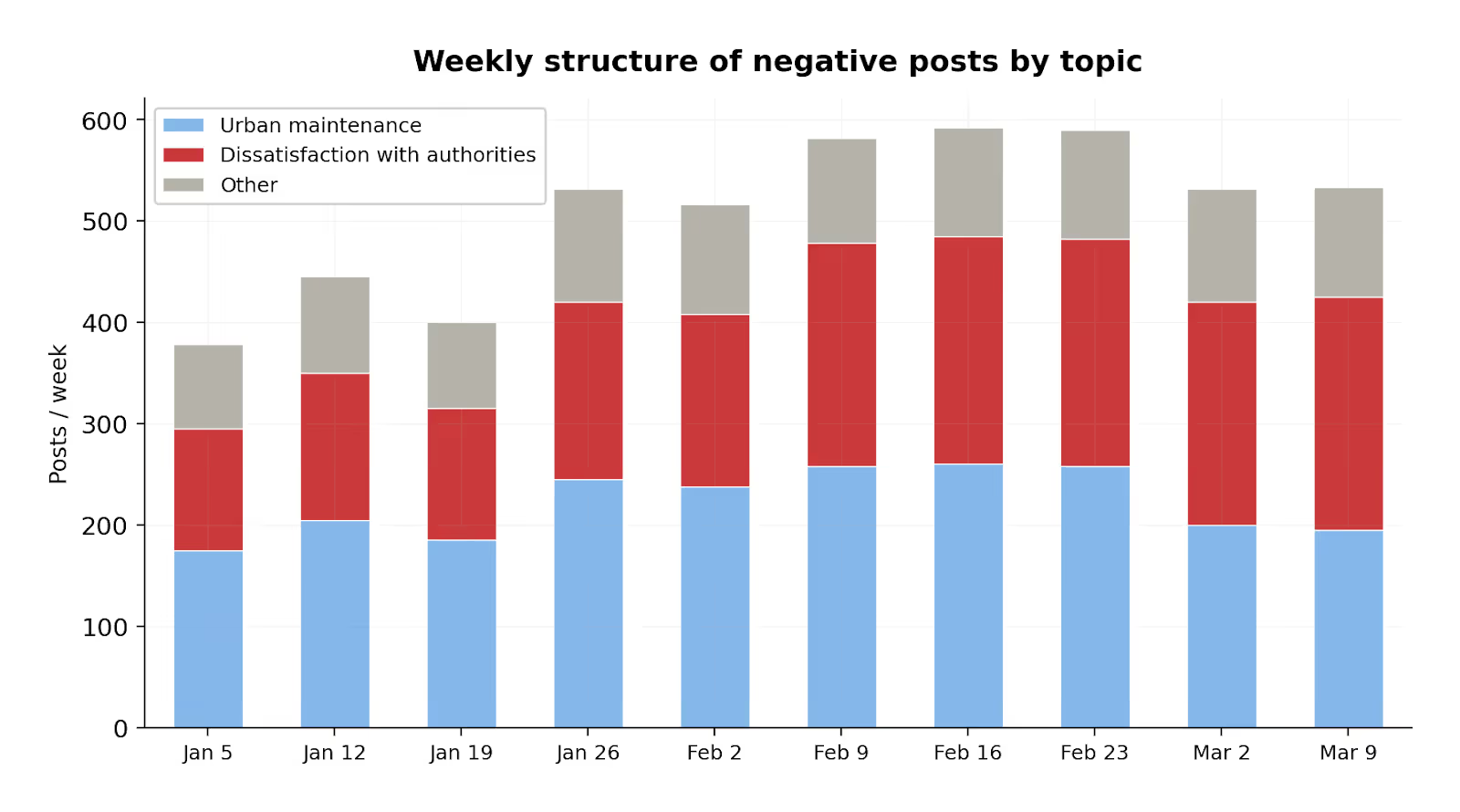
Throughout January–March, Moscow Telegram communities were dominated by two major thematic blocks. The most numerous was urban maintenance: road conditions, building entrances, garbage, public transportation. This is the background noise of local channels — daily complaints with relatively low reach (an average of 129,000 views per post).
The second largest was dissatisfaction with the authorities. Fewer posts, but significantly greater reach: 200,000 views per post compared to 129,000 for urban maintenance. These topics concentrate in large aggregators and attract more reposts and reactions.
The remaining blocks — violence and threats, economy, imposed patriotism, war, healthcare and education, mobilization — are each smaller in volume, but some have very high per-post reach. For example, the mobilization topic accounts for only 44 posts over the entire period, yet its average reach is 411,000 — the highest figure in the database. The topic is simultaneously frightening and compelling.
In January, the agenda looked routine: snowstorms, airports, transport chaos. Muscovites complained about the weather and roads. In February, the emphasis began to shift — the topic of Telegram blocking emerged, and along with it the category ‘Idiotic Bans and Decisions’ gained momentum in communities (the category name was coined by my colleague back in 2022, but it captures the tone of the audience at this moment with remarkable precision).
The dynamics of the ‘Idiotic Bans’ subtopic are telling:
In terms of reach, ‘Idiotic Bans’ is the top subtopic in the entire database: 176 million views across 573 posts (an average of 307,000 views per post). For comparison: road conditions — 932 posts, but only 90 million views.
In March ‘Dissatisfaction with Authorities’ for the first time displaced ‘Urban Maintenance’ from first place in number of publications. In the previous two months, utility topics had steadily led. This is a structural shift: channels began paying more attention to systemic problems rather than local ones.
In parallel, the topic ‘War Nearby’ surged sharply: from 1.2 posts per day in January to 5.3 in March (a 3.3-fold increase). This is linked to mass Unmanned Aerial Vehicle attacks on Moscow Oblast and the associated GPS jamming.
The Telegram blocking topic in the sample: 129 posts, 31.4 million views. Average reach per post — 243,000 (20% above the baseline).
The sequence of events can be broken down into five waves.
Wave 1 (January 16). Users began reporting slow video and notification loading. Roskomnadzor — Russia’s internet regulator — denied any new restrictions. That same day, Deputy Svintsov explained that the slowdown was due to Telegram being ‘too slow to block anonymous channels.’ The contradiction between the official position and reality was the first warning sign for Moscow users of the app.
Wave 2 (January 21–30). Senator Sheykin confirmed that ‘consistent measures are being taken’ against Telegram — five days after the official denial. Deputy Delyagin announced that the messenger would be fully blocked in September, and on the same day called this a ‘hypothesis.’ On January 30, 17 deputies proposed a moratorium on the ban — ‘to reduce public irritation.’ All of this looked like internal chaos.
Wave 3 (February 10–20) — the peak. On February 10, RBK (one of Russia’s largest business media outlets) reported that Roskomnadzor had ‘decided to begin the blocking.’ 29 posts in a single day, 6.9 million views. A record day for the entire period. In the following days, Muscovites discussed the following news:
Wave 4 (February 26). RBK again reported full blocking ‘in early April.’ 11 posts, the second highest single-day concentration.
Wave 5 (March 5–12). The Federal Antimonopoly Service declared advertising on Telegram illegal. Deputy Svintsov stated that the messenger ‘will not work even with a VPN.’ A similar fate was announced for Instagram and YouTube.
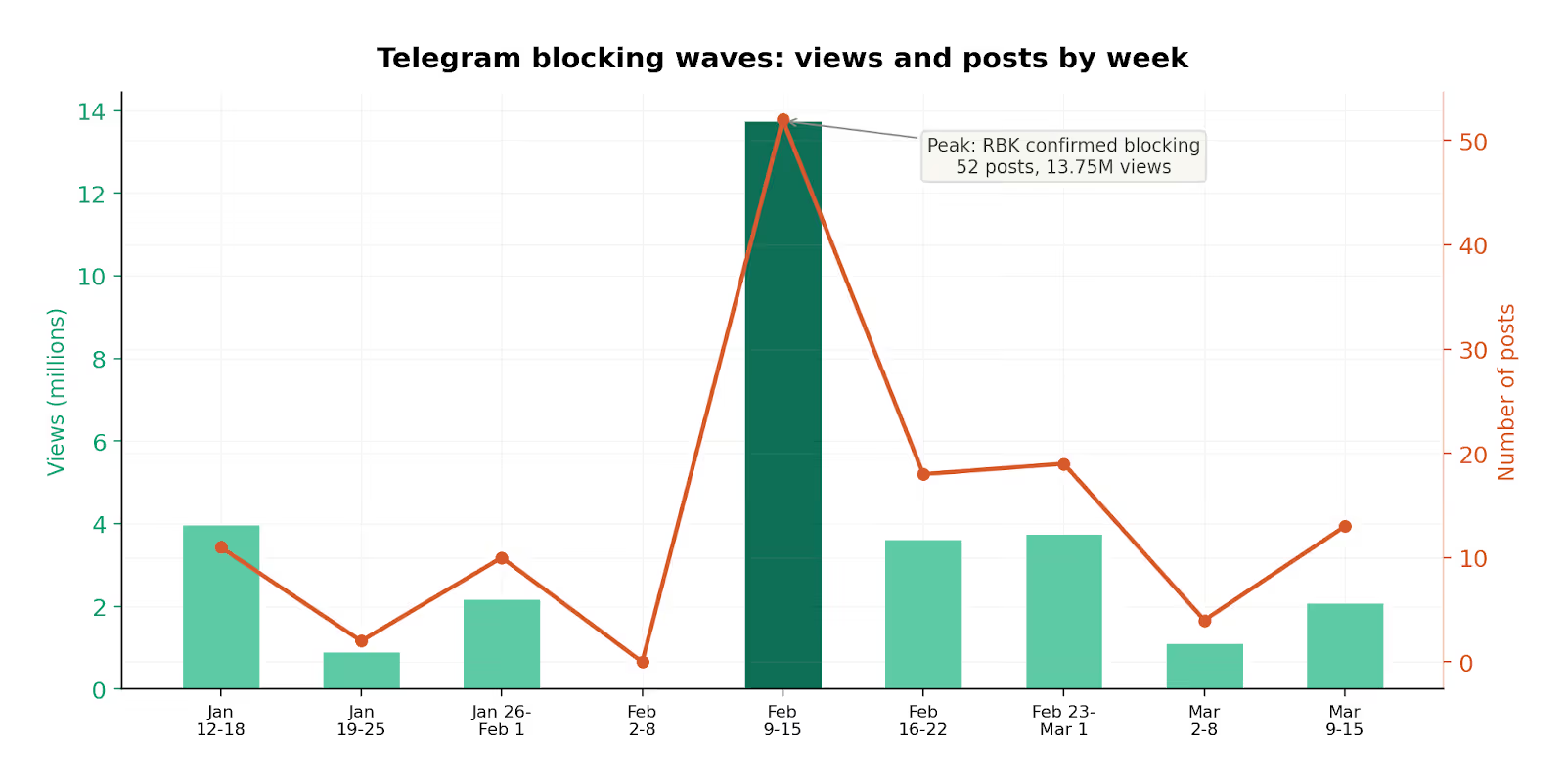
One of the most interesting findings of the monitoring is the recurring communication pattern of the authorities. Roskomnadzor twice denied restrictions on the very days they were in effect (January 16 and February 17). In the classification, 8 posts received the label ‘Propaganda Lies’ — channel audiences recorded these contradictions and highlighted them.
Overall, 96.9% of posts in the sample relating to news about Telegram blocking are classified as ‘Dissatisfaction with Authorities,’ and 83.7% specifically as ‘Idiotic Bans and Decisions.’ This is the highest concentration of a single subtopic in the thematic sample.
The main explanation is straightforward censorship. The authorities want to remove the last major platform they do not fully control. Telegram serves as a hub for anonymous channels, protest coordination, and data leaks that are inconvenient for security forces. The audience directly compares the situation to YouTube: ‘the process will be gradual, little by little,’ as Deputy Delyagin put it. The official justification changed every week — from ‘Telegram is too slow to block anonymous channels’ to ‘recruitment of minors’ and ‘infrastructure for personal data harvesting.’ The audience noticed this fluidity and documented it as ‘propaganda lies.’
The second explanation is a lobbying one. Blocking Telegram clears the market for state-controlled platforms: VKontakte and MAX. This theory was reinforced by the fact that precisely these services ended up on the ‘white lists,’ and students were compelled to install MAX at universities under threat of academic consequences. The channel Novosti Moskvy — the loudest voice on the topic — would itself conclude each post about the blocking threat with a call to subscribe to its backup channel on MAX, inadvertently demonstrating who benefits from the panic.
If blocking Telegram is a digital restriction that can be circumvented via VPN, then shutting down mobile internet is an entirely different level. It cannot be bypassed. It is like the difference between a locked door and a demolished bridge.
The legislative groundwork was laid publicly. On January 27, the State Duma passed amendments in the first reading: telecommunications operators are required to shut down internet and mobile connectivity at the request of the Federal Security Service with no right of refusal. On February 17, the law was adopted in its final form. On February 20, Putin signed it. On March 1, it came into force — Roskomnadzor gained full control over backbone traffic.
Between the signing of the law and the first actual shutdown in the Russian capital, 13 days.
March 5, 8:00 PM — the first mass mobile internet shutdown in the South Administrative District (YuAO) of Moscow. All operators were affected: MTS, Tele2, T-Mobile. Operators claimed their networks were ‘operating normally’ — the problems, they said, were ‘external.’
March 6 — the shutdowns spread to the city center (Central Administrative District). Cashless payments stopped working — some shops and cafés came to a halt. The publication Kommersant reported: ‘by order from above.’
March 9, Day 4 — taxi drivers cannot accept orders, GPS navigation is not working. Shops are switching to cash. People are descending into the metro to catch Wi-Fi. One post reads: ‘It feels like we went back to the 90s.’
March 10, Day 5 — Putin’s mouthpiece Peskov publicly confirmed that the shutdowns ‘are related to security and are taking place within the framework of the law.’ Only four services remained accessible: VKontakte, Yandex, Gosuslugi (the government services portal), and the aforementioned MAX. Near train stations, the almost-forgotten ‘bombilas’ reappeared — unlicensed taxi drivers charging triple the usual rates.
March 11 — media began tallying the losses: 3 to 5 billion rubles over five days. The hardest hit were courier services, taxis, car-sharing, and retail. Moscow theaters asked audiences to print out their electronic tickets.
March 12 — sales of paper maps rose by 50%. Demand for pagers increased by 73%. Portable Wi-Fi routers with VPN jumped in price from 10–35 thousand to 50 thousand rubles. A Yandex robot scooter ‘got lost’ in Khimki without geolocation.
March 13 — a map was published: 40 out of 132 Moscow districts (30% of the city) without mobile internet. Yandex Maps recorded 2 million offline map downloads. The State Duma proposed reviving payphones. Federal Security Service-licensed VPNs were declared the only legal ones. Notably, particularly popular was the news that Russians would be allowed to use VPNs, but only those approved by the Federal Security Service.
March 14–15 — the shutdowns spread to Moscow Oblast. Reports emerged of mass Unmanned Aerial Vehicle attacks: 64 drones on March 14, 102 on March 15. Channels recorded both phenomena simultaneously, but without explicitly linking the internet shutdowns to the Ukrainian drones.
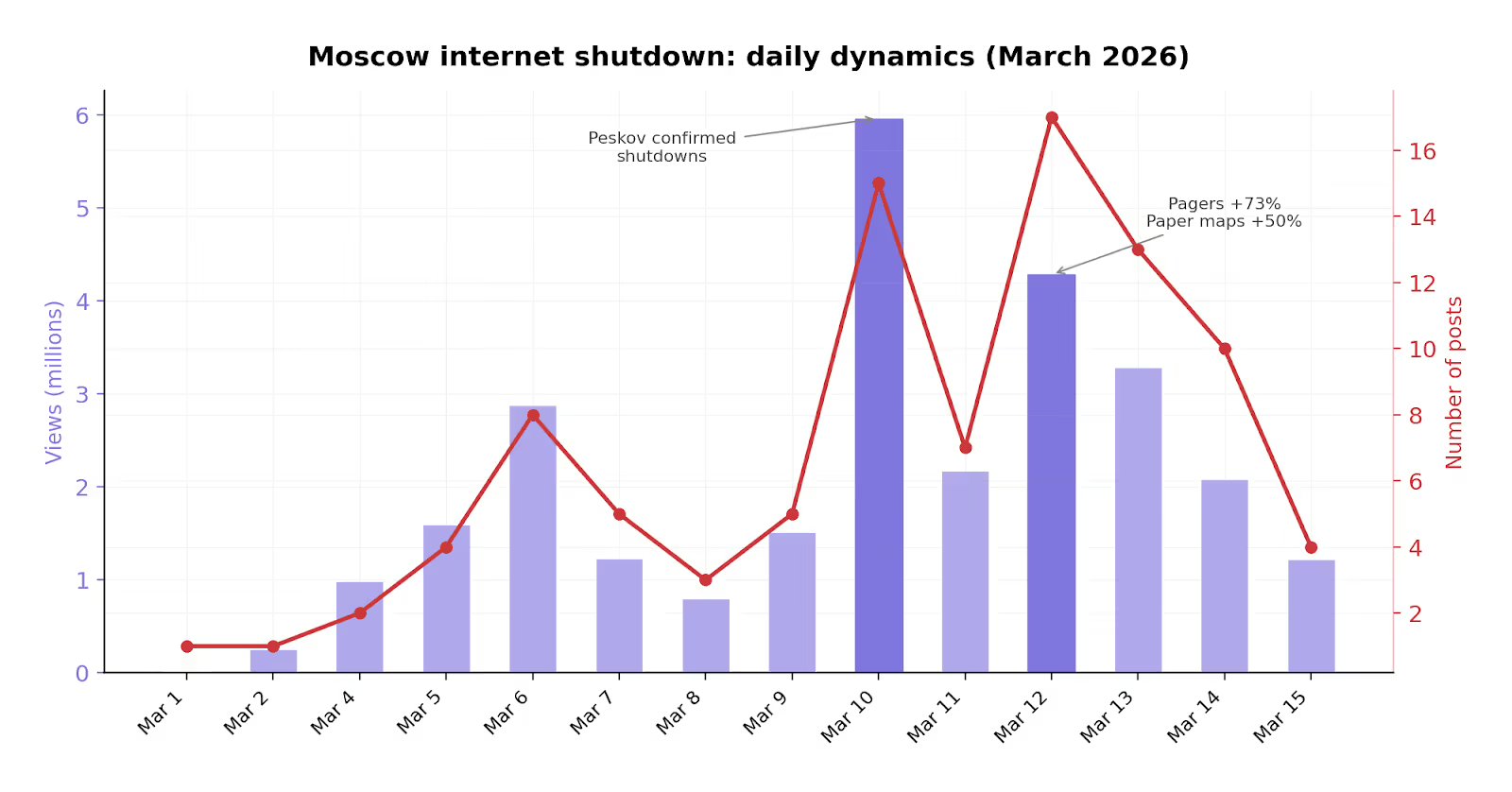
The first and most widespread theory: countering drones. GPS jamming disorients the navigation systems of Unmanned Aerial Vehicles, and the internet shutdown is a side effect of Electronic Warfare system operations. The mass attacks (64 drones on March 14, 102 on March 15) coincided with the most acute phase of the shutdowns, reinforcing this theory. Peskov’s official statement also pointed to ‘security,’ though without specifics.
The second theory: concealing the consequences of strikes. Internet shutdown makes it impossible to quickly spread videos from strike sites, photos of destruction, and coordination among eyewitnesses. The audience in the comments stated this directly: ‘they turn off the internet so we can’t see where it hit, not to stop the drones from flying.’
The third theory: testing the ‘sovereign internet.’ The shutdown is not a temporary measure but a rehearsal for complete digital isolation. Plans to build an autonomous network by 2028 at a cost of 1 trillion rubles, a ‘white list’ of four state-controlled services, Federal Security Service-licensed VPNs as the only legal ones — all of this fits the logic of the ‘Chinese model,’ which was practically officially announced. Posts about ‘sovereign internet’ were met with fear, despair and anger — without a trace of humor.
Large Moscow aggregators discussed the shutdowns through the lens of rights, censorship, and ‘digital GULAG.’ Small Moscow Oblast channels discussed them through the lens of daily life: navigation not working, taxis standing idle, payment terminals dead.
The channels of Khimki, Mytishchi, and Sergiyev Posad for the first time during the entire monitoring period began generating original content rather than merely forwarding news from central channels. The robot scooter that got lost in Khimki without GPS was their discovery and a genuine local hit that local ‘journalists’ could only have dreamed of.
Three themes merged into one. Blocking Telegram (from January), the crackdown on VPNs and the ‘sovereign internet’ (February), and the physical shutdown of mobile connectivity (March) — for the Moscow audience, this is already a single narrative. We recorded this as the continuous growth of the ‘Idiotic Bans’ subtopic: from 6.9% in January to 17.3% in March. The topic surpassed everything else in reach — including roads, transport, and utilities.
The audience of Moscow channels does not believe in a single reason for the Telegram blockages and internet shutdowns. The theories do not compete with one another — they combine into a single picture in which security logic (drones, Electronic Warfare) serves as a convenient cover for two parallel processes: clearing the information space of uncontrolled platforms and field-testing the infrastructure for complete digital isolation. That is, the drones are real, but the ‘white list’ of four state services is not aboutsecurity — it is about plain and simple control.
From Digital Discomfort to Infrastructure Paralysis. Slowing down Telegram is an inconvenience. Shutting down mobile internet across a significant portion of Moscow for 10+ days means halting logistics, payment systems, navigation, taxis, and delivery. Losses totaled 3–5 billion rubles over the first five days. Muscovites discussed how they switched to cash, bought paper maps, and paid ‘bombilas’ near train stations.
Irony as a Defense Mechanism. Alongside the anger, a ‘sarcastic adaptation’ is evident: jokes about SMS romance, pagers, payphones, and navigating by the stars. These posts attract a high share of mockery. The absurdity of the situation breeds humor — but humor does not dispel the aggression; it merely adds contempt to it.
The Authorities Are Losing the Communications Battle. The ‘deny — confirm — refute’ pattern erodes trust. Roskomnadzor denied the restrictions on the very days they were in effect. Peskov confirmed the shutdowns only on the fifth day. The audience notices these contradictions.
War as Background and as Pretext. Mass Unmanned Aerial Vehicle attacks on Moscow (up to 102 drones per night) are the real context in which the shutdowns are occurring. GPS jamming is indeed a means of countering drone navigation. But the audience also sees another logic: internet shutdowns prevent the spread of videos from strike sites and make independent documentation of attack consequences impossible.
The megapolis of Moscow has so far not experienced a single truly massive Ukrainian strike, yet it already lives as though it has experienced more than one. Now it is not the Armed Forces of Ukraine that cut off the internet for Muscovites, not drones that stopped taxis, and not sanctions that brought the ‘bombilas’ back to the train stations. All of this was done by their own government — just in case, in the name of security, within the framework of the law. Muscovites are standing in lines for cash, downloading offline maps and joking about pagers — not because their city is being bombed, but because their state fears its own citizens even more than Ukrainian drones and long-range flamingos.
<-
Back