
<-
Back to
News
In our piece for OBOZ.UA, we examine how residents of St Petersburg responded to Ukrainian drone strikes in regional Telegram channels and VKontakte communities.
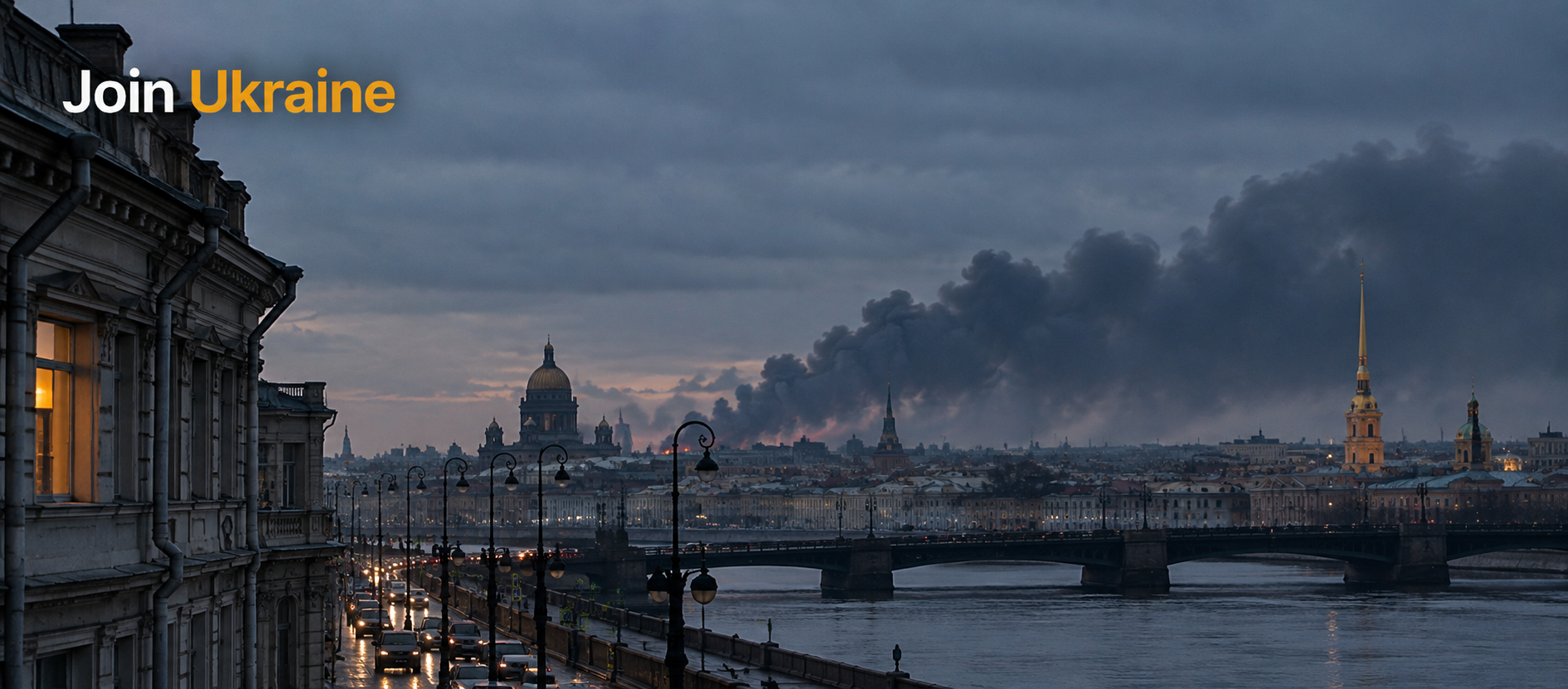
Following the attack on St Petersburg overnight on 17–18 October, Russians discussed not only the explosions and fires but also the authorities’ inability to protect their own cities. In the comments, they criticised air defences, local officials and dictator Vladimir Putin.
These sentiments were documented by the NGO Join Ukraine as part of its weekly Deep Russia monitoring covering 12–18 October. The study analysed posts and comments from 536 VKontakte groups and 428 Telegram channels covering Russian regions and Ukraine’s temporarily occupied territories.
Residents of St Petersburg and the Leningrad region, in particular, complained about problems with public warning systems and civil defence. They reported locked basements in residential complexes, a lack of access to shelters and alerts that arrived too late.
“Why do the sirens only wail during drills? Why not when they’re actually needed?” one user asked in a St Petersburg community.
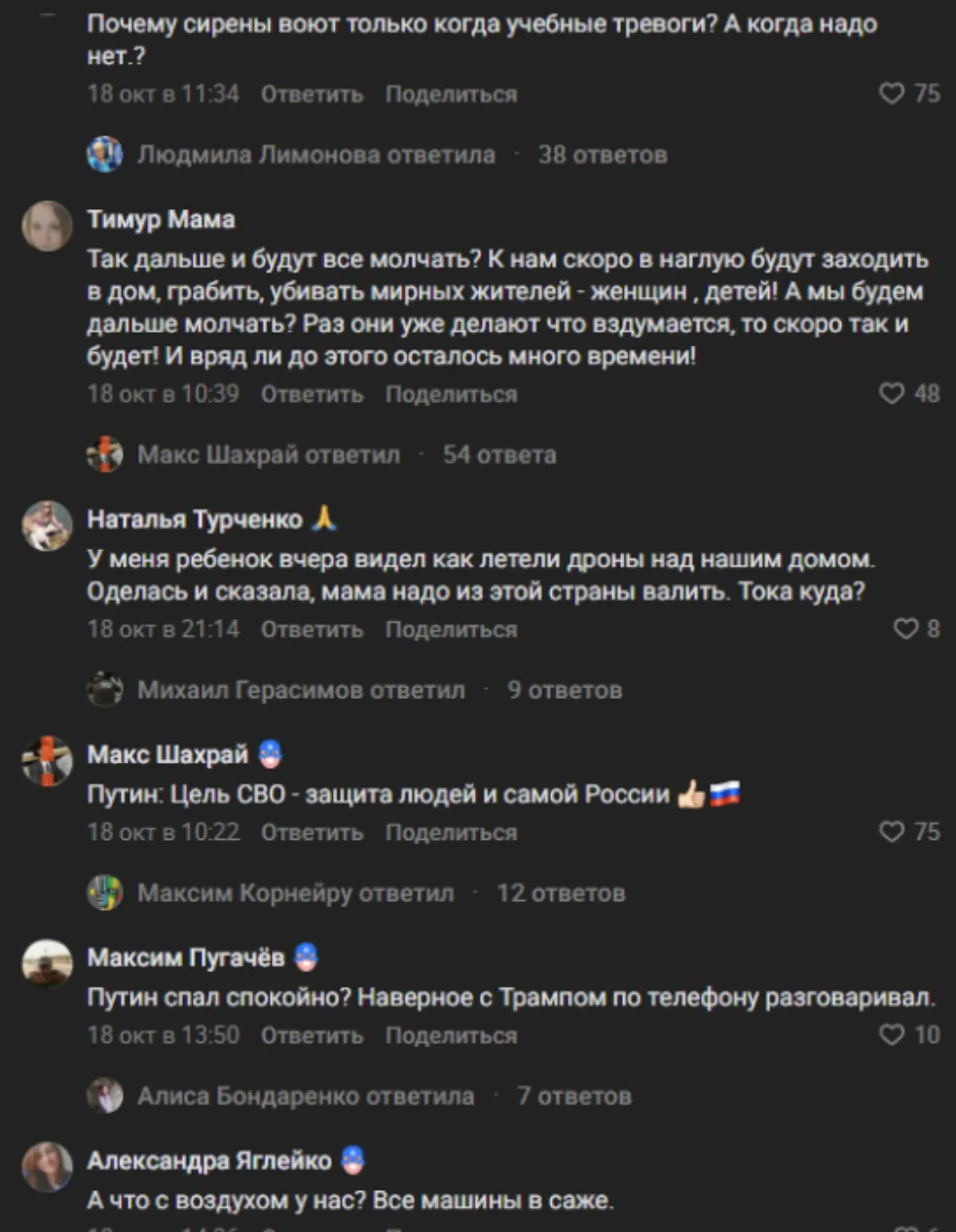
Others accused the authorities of failing to provide adequate protection for the population, even though Russia was already in its fifth year of full-scale war against Ukraine. They also questioned the effectiveness of Russian air defences: despite military officials’ claims that numerous drones had been shot down, drones continued to reach important facilities.
Some commenters openly asked why the Russian authorities promised to protect the country but were unable to guarantee the safety of its citizens.
The attack prompted some Russians to reflect on the cost of the war and the country’s leadership’s responsibility for its consequences. In the comments, they pointed to the authorities’ broken promises and questioned the point of continuing military action.
“Maybe they shouldn’t have started the war? Maybe the old man has been lying all along? Maybe losing 300,000 lives was too high a price? Maybe it’s time to ask the old man to step down?” one user wrote in a regional online community based in Rostov.
Others criticised Putin for leaving Russian cities vulnerable to attacks even after several years of war. Other participants in the discussions echoed these comments.
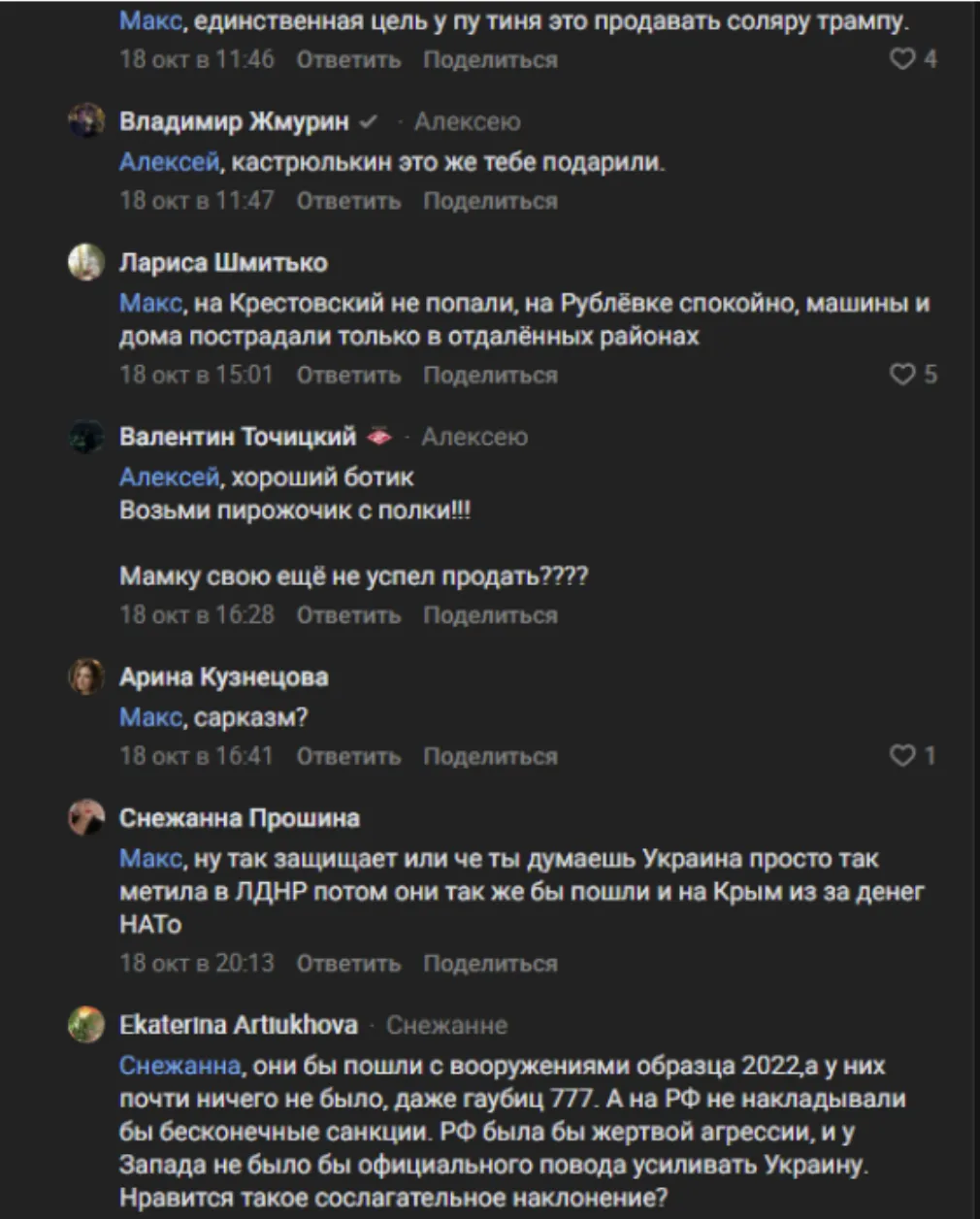
At the same time, criticism of the authorities did not necessarily mean that people wanted the war to end. While some users called for hostilities to stop and negotiations to begin, others, on the contrary, demanded intensified strikes against Ukraine, including Kyiv.
Thus, despite their dissatisfaction with the authorities’ inability to protect the population, some Russians continued to support the war.
Another topic of discussion was the discrepancy between official statements and reports about the actual consequences of the attack. Federal media focused on the number of drones they said had been shot down, while regional sources reported fires, infrastructure damage and disruptions to services.
Users were outraged that television had not covered the consequences of the attack and that claims of minor damage did not reflect what was happening on the ground. Among the most widely discussed issues were damage to a VKontakte data centre, disruptions to digital services and flight delays at Pulkovo Airport.
Yuliia Yelenich, a Russia analyst at Join Ukraine, stressed that dissatisfaction with the authorities’ response to the attack does not necessarily indicate anti-war sentiment.
“For some Russian users, the main complaint is that the war puts them at risk, while the state fails to provide the protection it has promised. At the same time, some commenters question whether the war itself is justified and hold Putin responsible for its consequences. It is important to distinguish between these positions: dissatisfaction with the consequences of the war is not the same as wanting it to end,” she said.
<-
Back