
<-
Back to
News
In an article for OBOZ.UA, we examine how local residents reacted to the visit in Telegram channels and VKontakte communities.
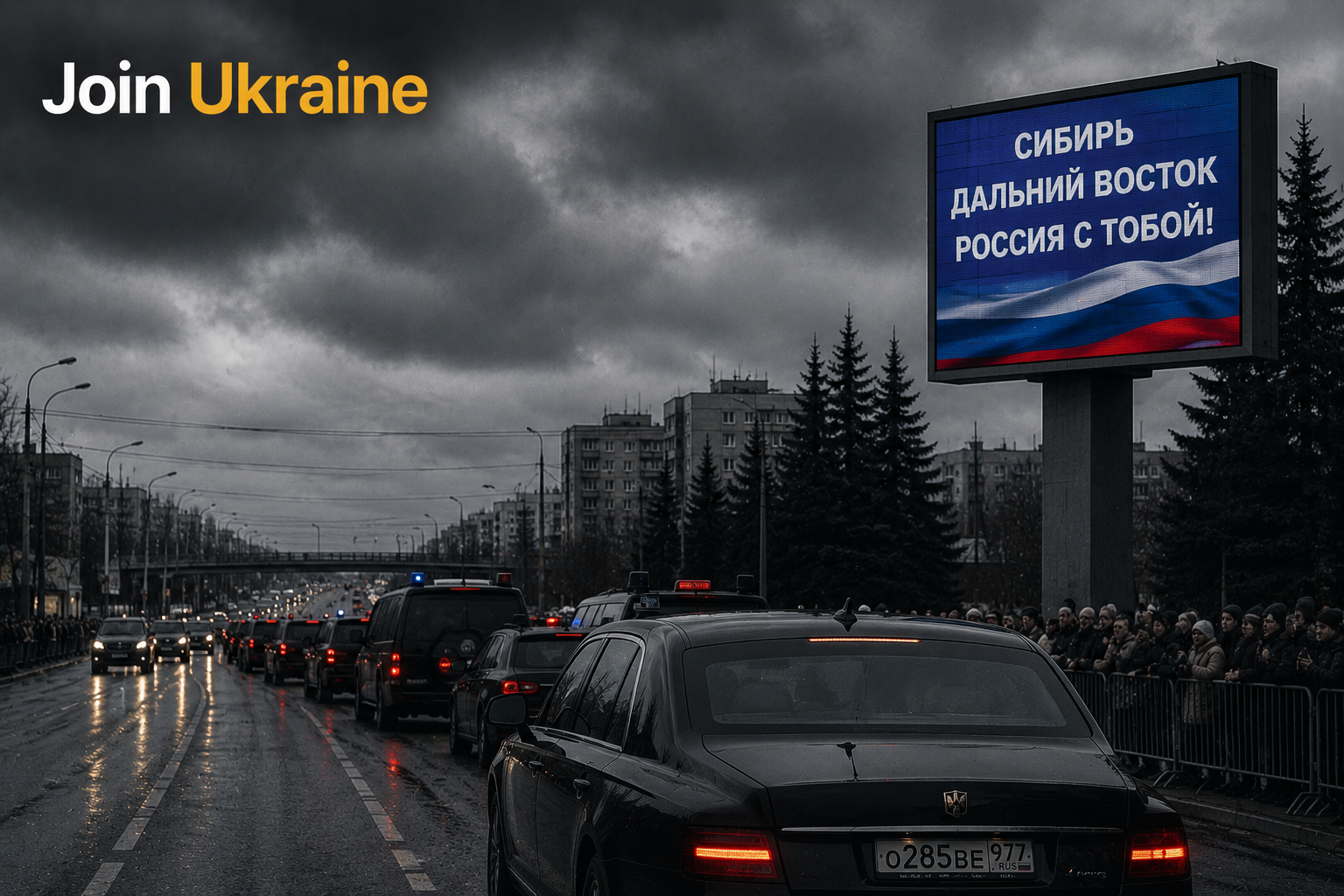
Russian dictator Vladimir Putin’s trip to Siberia and the Russian Far East on August 13 was intended to demonstrate the Kremlin’s attention to the regions. However, it sparked discontent among some local residents. In regional online communities, Russians discussed road closures, hours-long traffic jams, and doubts about whether the president’s meetings with local residents were staged.
This is evidenced by monitoring of regional Telegram channels and VKontakte communities conducted by Join Ukraine. Analysts from the NGO monitored the period from August 10–16, 2026, tracking the Russian audience’s reactions to events in Russia’s regions.
During his trip, Putin visited several regions of Siberia and the Russian Far East. In Yuzhno-Sakhalinsk, in particular, he attended exercises involving the Pacific Fleet, appearing in a naval uniform.
At the same time, in Novosibirsk Oblast, some of the discussion focused not on the president’s itinerary but on the inconvenience his visit caused local residents.
“They brought the whole city to a standstill just because of one pensioner,” one local user wrote.
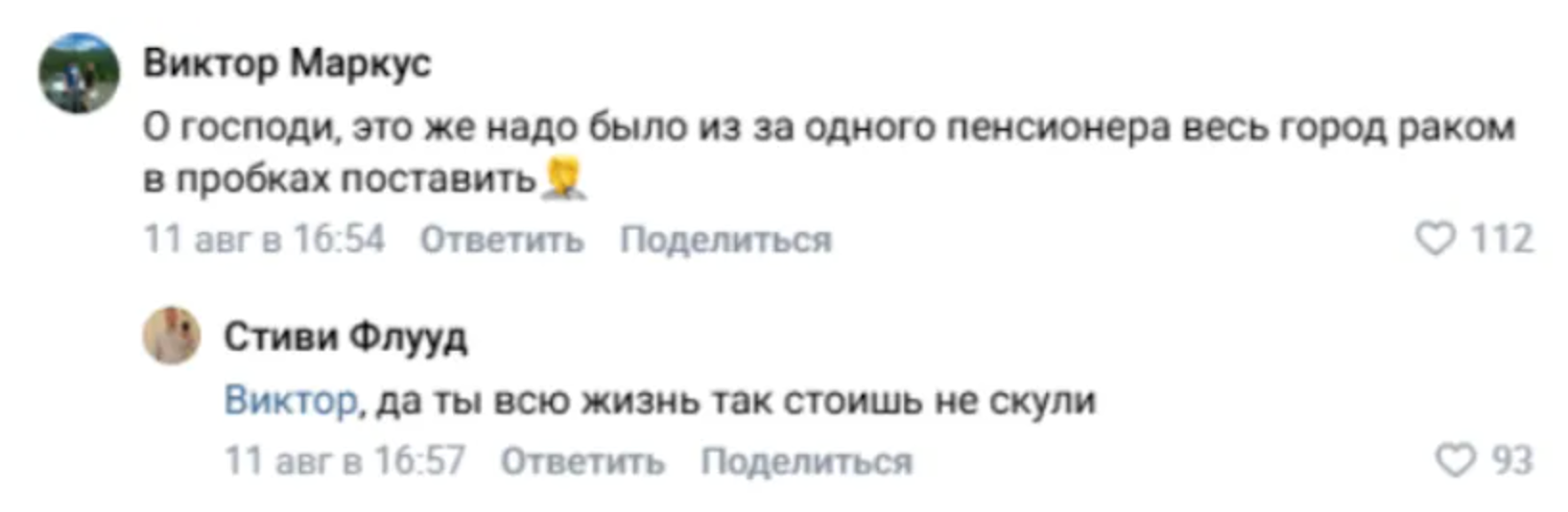
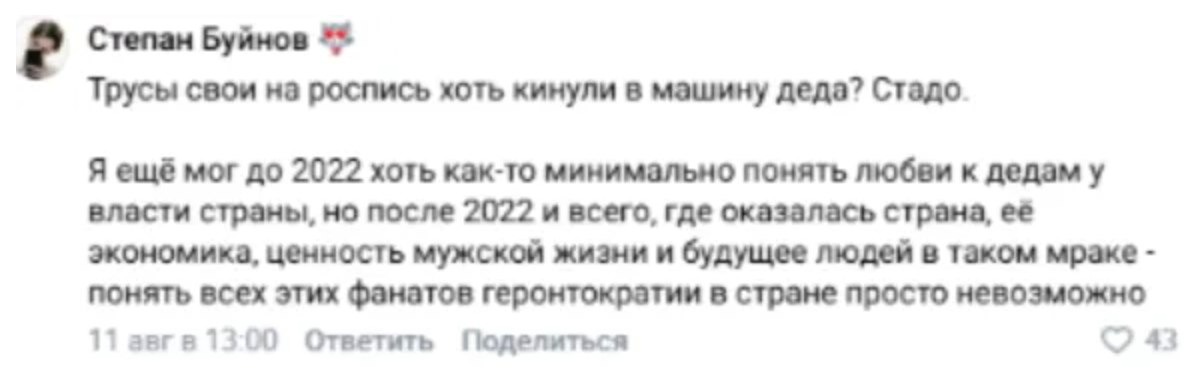
Russians also discussed Putin’s meetings with local residents. Some commenters questioned how spontaneous these encounters really were, suggesting that people may have been selected in advance and positioned along the route of the presidential motorcade.
At the same time, reactions to the Russian president’s arrival were far from uniform. Some users viewed his visit positively and considered the very fact that he came to the region important. Others noted that, at least before Putin’s arrival, local authorities were making an effort to quickly put the city in order, while some thanked the president for paying attention to the region.
Join Ukraine’s monitoring also highlighted the fact that the presidential visit took place against a backdrop of broader discontent related to the war. Obituaries for fallen soldiers regularly appear in regional online communities, with some posts receiving hundreds of thousands of views and thousands of reactions. People express their condolences in the comments, while also raising questions about the scale of the casualties and how much longer the war may continue.
Another wave of discussion was triggered by the large-scale Ukrainian drone attack on Nizhnekamsk in Tatarstan on August 20. Posts about the attack spread across more than 60 regions and generated more than 3,200 comments. In some comments, users openly questioned why civilians were dying because of the war, while the federal authorities, in their view, were failing to show adequate involvement in the situation.
According to Yuliia Yelenich, an analyst covering Russia at Join Ukraine, reactions in regional online communities demonstrate the gap between the Kremlin’s official narrative and the sentiments of part of the Russian audience.
“The Kremlin can take the president to any region, close the roads, line the route with the people it wants to see there, and show a polished picture on television. But it cannot shut down the comments in local online communities. And that is where we see a completely different Russia — one marked by irritation over traffic jams, fear of strikes, questions about the dead, and distrust of the official version of reality. Regional communities show not what the Kremlin wants to hear about itself, but what its audience is willing to say when the federal cameras turn away,” Yelenich said.
She added that local residents judge presidential visits through the lens of their own everyday experience — particularly safety, the war, casualties, prices, and the performance of local authorities.
<-
Back